We started the day in a cement-walled room in the Amman office of the Collateral Repair Project, a recipient of DACF funding since 2016. Led in meditation by a Syrian refugee, people born in Sudan, Somalia, India, Netherlands, US, Jordan and Iraq sat in simple chairs forming a circle.
CRP started in 2006 to address the influx of Iraqi refugees from the war next door. CRP’s work has been informed by the techniques of the Center for Mind and Body Medicine in Washington, DC to heal population-wide trauma. Since then, CRP has served the needs of waves of Syrian refugees. Because of numbers and the nature of the conflicts they fled, Iraqi and Syrian refugees have dominated the efforts of worldwide refugee organizations, while the needs of minority refugee communities in Jordan have flown under the radar.
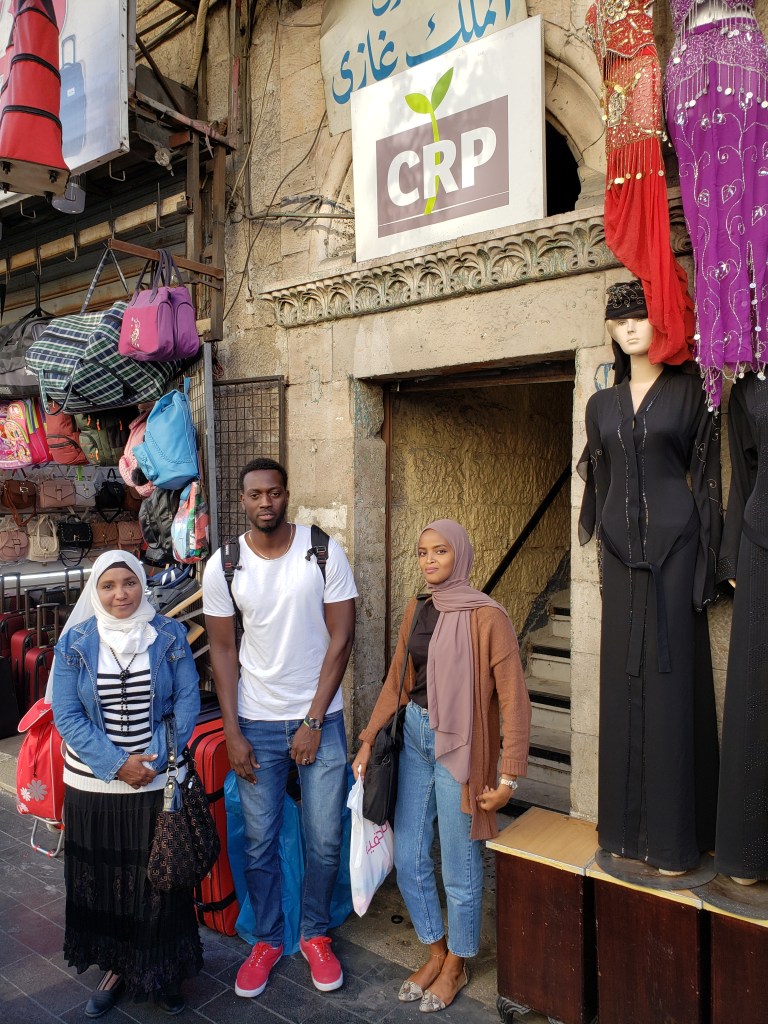
Several CRP employees in the meditation circle that morning spend three days a week at CRP’s newest community center in downtown Amman trying to help one of the most neglected groups in Jordan: refugees from Somalia, Sudan and Yemen (S, S and Y). That’s where DACF’s support comes in. CRP’s theory of change is to support the most vulnerable S, S and Y refugees with food vouchers worth about $50 in hopes they come to the center to take classes that help heal deep seated trauma, increase their knowledge of English or give them a break by providing preschool (see below) or a chance for their children to play or engage in kickboxing. CRP estimates about 1 in 3 families receiving emergency food assistance eventually enroll in programs.
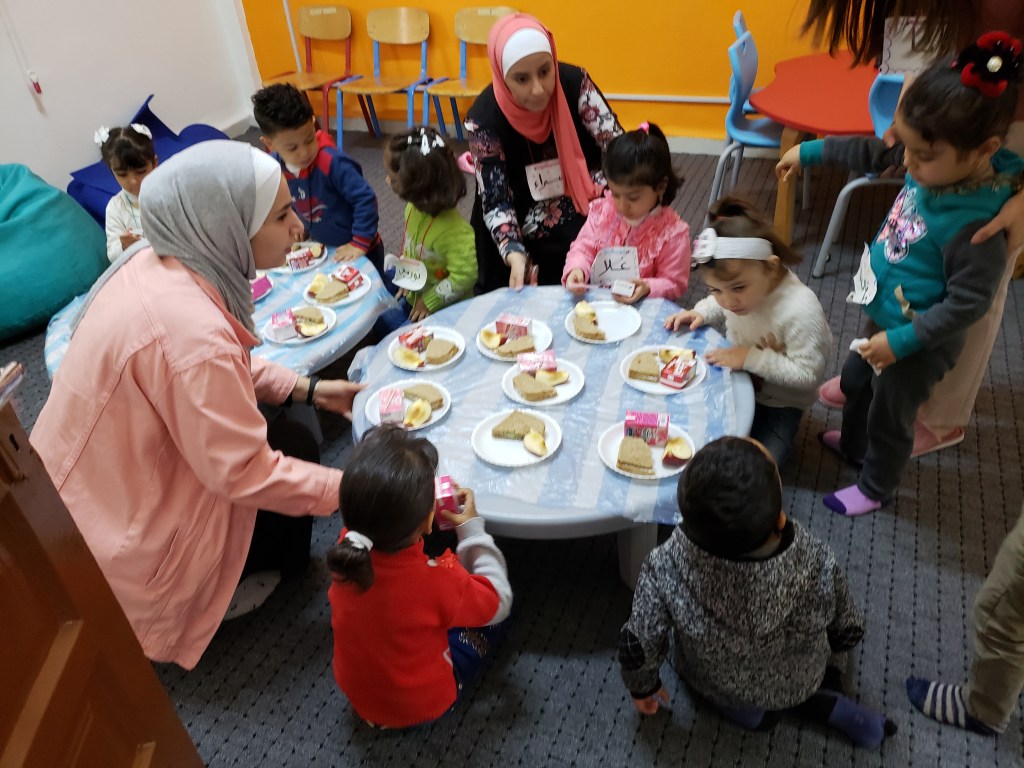
Close to 90 families used vouchers funded by DACF from March to June 2019 to purchase groceries at nearby stores. Money flows directly between CRP and the stores with the refugees providing to the stores the voucher for food they choose. To help them shop smartly – nutritionally – CRP provides nutrition classes in the community center.

Amal, a refugee from Sudan whose husband is in jail in Jordan for working illegally, uses the vouchers to support herself and her three young daughters. The downtown center is her “family home,” a place where she can gather with others and even learn Yemeni and Somali recipes.
The DACF support, while small (it accounts for about 5% of CRP’s food vouchers overall), is made more significant by the fact that CRP’s traditional donors are preferring to support activity-heavy programs instead of humanitarian assistance like food. CRP’s long-term plan is to do this as well. A central part of moving away from dependency programming to development programming will be to put a time limit on how long a family can receive food vouchers, perhaps two years. With more focus on income generating activities, such as sewing, baking and craft-making, CRP hopes to generate income that will be shared with the refugees who work, thus increasing their financial independence.
CRP is researching the pros and cons of registering as a local Jordanian NGO, a move that would make fundraising locally easier and allow for more income-generating programs but also increase bureaucratic red tape around the release of funds.
But given Jordan’s status as a haven for refugees and the history of conflict in the region, there will remain a vulnerable sector that needs emergency assistance. CRP hopes DACF’s continued support can boost outreach and support to the S,S and Y populations. Click on the picture to listen to Faisal and Fowzi, refugees from Sudan and Somalia respectively, talk about DACF’s support this past year.
 Jeffrey Lilley Writing